_Line.svg)

Corrosion costs the global economy US$2.5 trillion every year. That's 3.4% of global GDP, according to the NACE International IMPACT Study - more than the entire GDP of Italy, Brazil or Canada. The Australian Corrosion Association extrapolates Australia's share of that at up to $78 billion annually. The oil and gas sector alone accounts for $20 billion of that figure.
Those numbers are large enough to feel abstract. They stop feeling abstract when you're looking at a corroded platform that needs to be shut down, a slurry pump that's failed ahead of schedule, or a processing tank that's developed a leak three years before it should have. At that point, corrosion has a very specific number attached to it, and it's sitting on your maintenance budget.
What corrosion actually does to a WA mining site
Mining in Western Australia presents about as difficult a corrosion environment as industrial assets can face. It's not one factor - it's several running at the same time.
In the Pilbara, iron ore dust is fine, abrasive and constantly present. Process water introduces moisture into structures that might otherwise stay dry. The wet season brings flooding and humidity that accelerates corrosion on anything not properly protected. Coastal operations and port facilities add salt to the mix. Process chemicals - acids, slurries, caustic solutions - attack surfaces that plain water would take years to degrade.
The equipment that suffers most in this environment includes:
- Structural platforms and walkways exposed to constant dust and moisture cycling
- Conveyor systems, chutes and hoppers handling abrasive ore
- Slurry pumps and pipelines in continuous contact with process water and chemicals
- Processing tanks, bins and ducting where chemical exposure is highest
The mechanism that makes this expensive is the compounding effect. Corrosion weakens the surface. Abrasion then removes the weakened material faster than it would remove healthy steel. Corrosion advances into the fresh metal exposed underneath. The cycle accelerates. A structure that might last 20 years in a controlled environment can be significantly compromised in five on a Pilbara processing site, if it isn't protected properly.
Documented outcomes in Australian mining back this up. Coating-protected slurry pump components have extended service life from six months to over 18 months - three fewer replacement cycles per year, per pump, plus the avoided downtime around each one.
What deferred maintenance actually costs
This is where procurement needs to pay attention.
Maintenance on corroded structures costs 5 to 10 times more than getting the coating right in the first place. That multiplier isn't an estimate - it reflects a structural reality in how corrosion remediation works. To recoat a corroded structure, you first have to remove the existing failed coating, prepare the corroded surface to the required standard, and then apply the new system. Each of those steps is more expensive than the equivalent step on a new or well-maintained surface.
Labour is 75 to 80% of coating cost on new steelwork. On corroded surfaces requiring heavy preparation, that figure climbs sharply. You're paying for removal, you're paying for more aggressive surface preparation, and you're often paying for access and containment to manage the waste from paint removal. The coating itself - the product - is the cheapest part of the job.
Then there's the production impact. Equipment failure in mining costs up to $130,000 per hour in lost production. Corrosion-related failures account for 80% of mechanical breakdowns after three years in heavily exposed equipment. When a corroded platform requires emergency repair or a slurry pipeline fails, the cost of the repair is only part of the number. The shutdown time, the re-mobilisation, and whatever production was lost during the event all land somewhere.
Between 15 and 35% of total global corrosion costs could be saved by applying currently available corrosion control practices. That translates to US$375 to 875 billion per year globally that is being spent on remediation that better upfront decisions would have avoided. In WA mining, the same logic applies at site level. The money is being spent either way. The question is whether it's spent on prevention or on repair.
The surface preparation problem
Most people who haven't worked in coatings assume that coating failure is a product problem - wrong paint, wrong thickness, wrong system for the environment. It sometimes is. But the single leading cause of premature coating failure is poor surface preparation, not the coating itself.
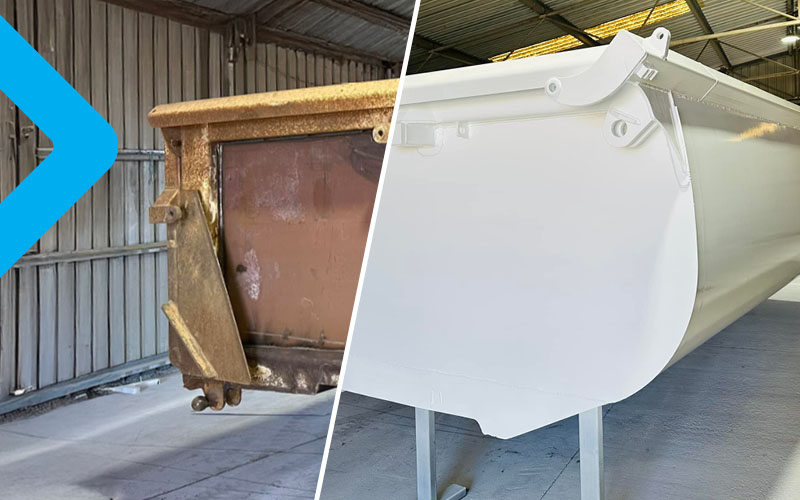
Abrasive blasting before coating more than doubles the service life of the coating system. That finding has been documented since a UK Corrosion Committee study over 70 years ago, and it's been confirmed repeatedly since. What it means in practice: a coating applied over inadequate surface preparation will fail early regardless of how good the product is. The contamination or mill scale left underneath breaks the adhesion bond, moisture gets under the coating, and the corrosion that was meant to be stopped continues underneath an apparently intact surface.
The practical consequence is that you pay for the coating twice. Once when it's applied incorrectly, and once when it fails and needs to be removed and reapplied properly. The second application costs more than the first would have if done correctly, because now you have a failed coating to remove as well as a corroded surface to prepare.
This is where certified inspection earns its place. NACE and ACA accreditation means an independent, qualified inspector has verified that surface preparation and coating application meet the required standard - not that the contractor says they do, but that a credentialled third party has confirmed it. Without that, you don't actually know what's under your coating or how long it will last.
The numbers on prevention
The initial protective coating on an industrial project typically costs 1 to 2% of total project cost. That 1 to 2% protects the other 98 to 99%.
NACE's analysis of US Department of Defense corrosion management found ROIs of up to 50:1 from using available corrosion control technologies. The automotive industry provides the most documented large-scale case study: systematic corrosion management reduced automotive corrosion costs by 52% between 1975 and 1999 - US$9.6 billion per year in savings, achieved by combining better coating systems with better application standards and inspection.
The payback timeline on proper industrial coatings in mining is not measured in years. It starts in the first maintenance cycle you don't have to perform. A slurry pump running 18 months instead of six months avoids two replacement events annually. Each avoided event removes the labour, parts, crane time, and shutdown cost associated with that replacement. Multiply that across a processing plant with dozens of similarly exposed components and the number accumulates quickly.
Curtin University research estimates corrosion costs the Australian economy more than $30 billion annually - and characterises much of it as preventable. The prevention isn't complicated. It requires getting the right coating system, applied correctly, inspected by someone qualified to verify it.
Bluechip Industrial Coatings
Bluechip Industrial Coatings is based in Henderson, WA, and delivers abrasive blasting and protective coatings services for mining, agriculture, ports and terminals, water and power, and infrastructure across Australia.
The credentials that matter to procurement: the team includes NACE and ACA-accredited inspectors. That means the standard applied to every job is independently verifiable, not self-assessed. When Bluechip signs off on a coating application, a qualified inspector has confirmed the surface preparation, application conditions, and coating system meet specification.
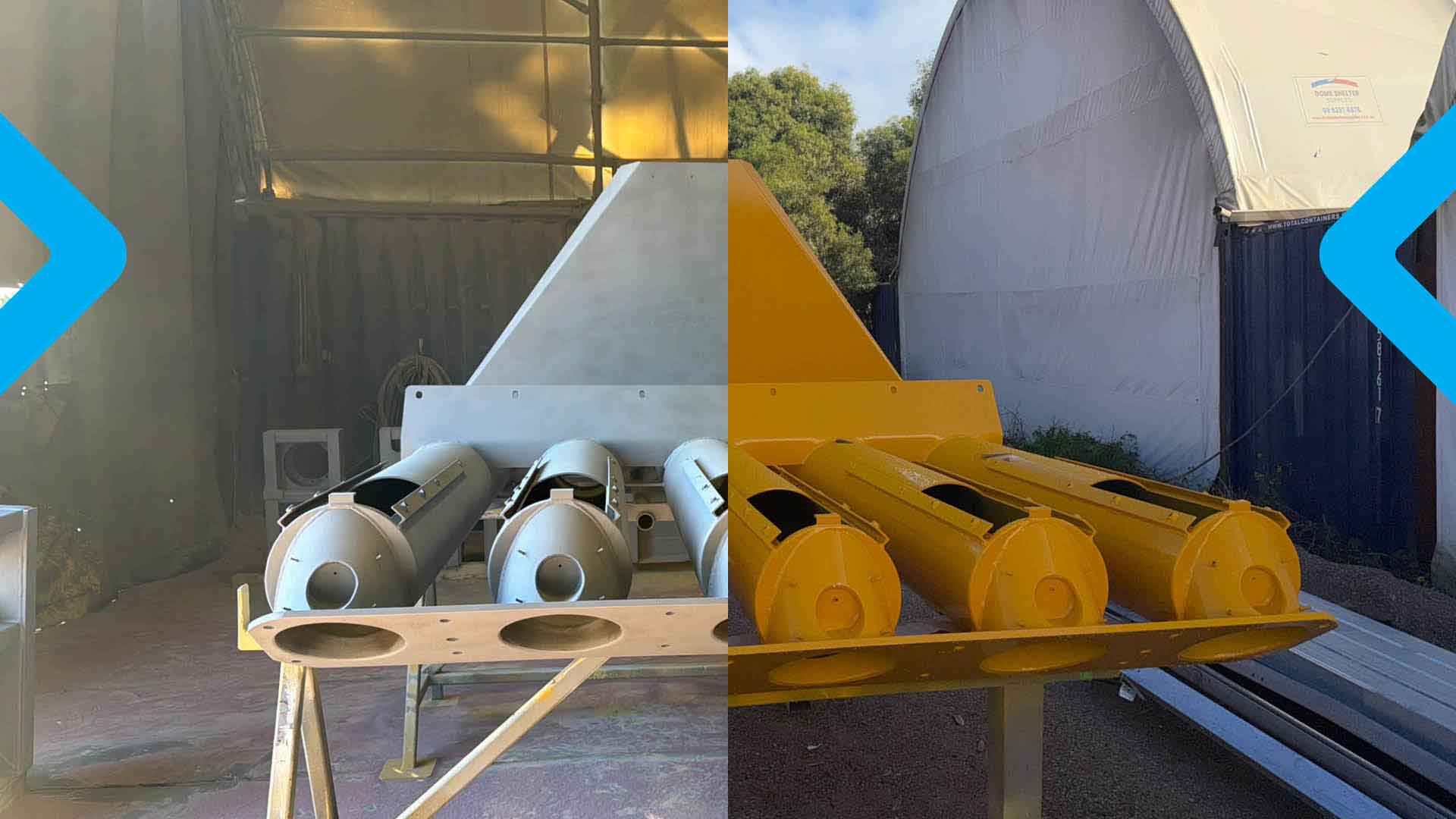
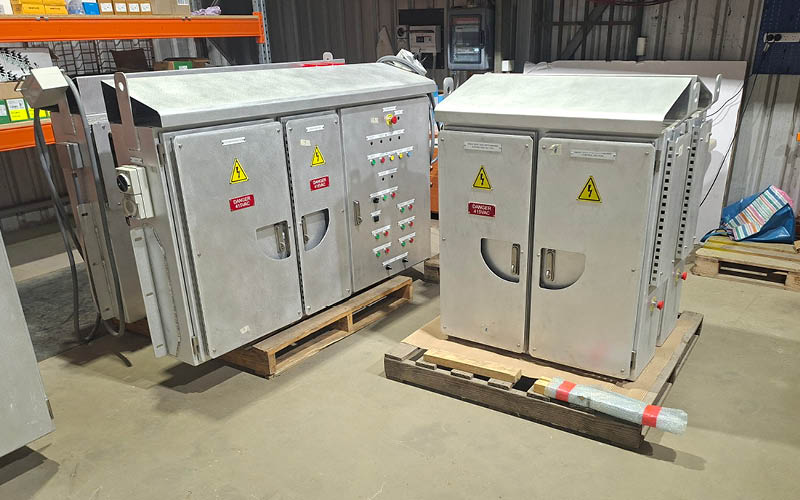
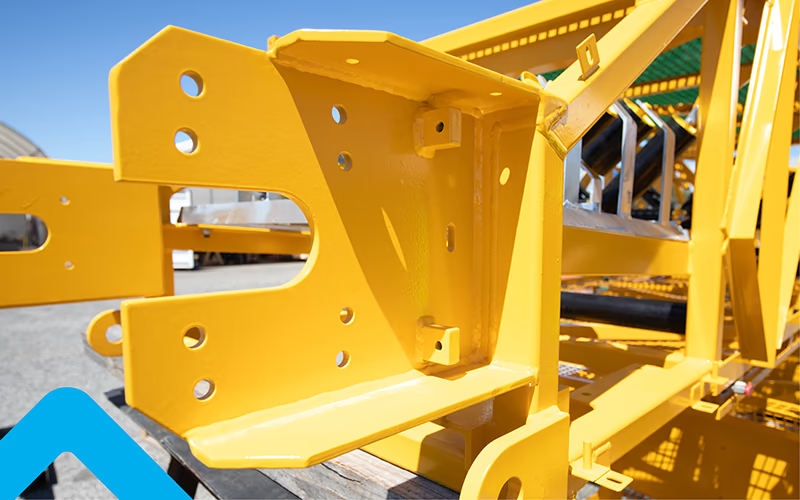
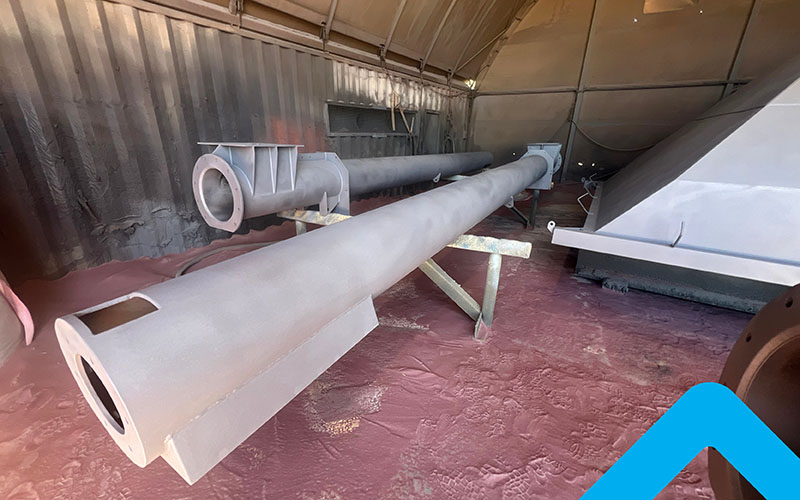
The delivery model covers both ends. Large structural components - platforms, steelwork, modular assemblies - can be blasted and coated in the Henderson workshop before transport to site, where controlled conditions produce the most consistent results. Mobile blasting and painting units handle field applications for structures already in the ground, including remote and regional sites across WA and nationally.
Getting coatings right at the start costs 1 to 2% of your project. Getting them wrong costs multiples of that, plus the production impact on top. Talk to the Bluechip Industrial Coatings team about your upcoming project requirements.